
Table of Contents
1. Planning Permission vs Party Wall: Why Most Homeowners Get This Wrong
Planning permission vs party wall, this is one of the most common areas of confusion for homeowners planning a home extension. Most people know they need planning permission for certain types of building work. Far fewer understand that planning permission and a party wall award are completely separate legal processes, and that one does not replace or cover the other.
You can have planning permission approved and still need a party wall award. You can have a party wall award in place and still need Building Regulations approval. All three are independent. All three may be required. And missing any one of them can stop your project, expose you to legal risk, or create serious problems when you come to sell.
D&M Building Services is based in Long Eaton and delivers home extension projects across Nottinghamshire, Derbyshire, and Leicestershire. We manage planning permission, party wall, and Building Regulations on every relevant project as standard. This guide explains each process clearly, what it is, when it applies, and what happens if it is not handled correctly.
The planning permission vs party wall distinction matters practically because the timelines for each process are different, the people responsible for each are different, and the consequences of getting either wrong are significant. Understanding the difference before your project starts is the most effective way to avoid the delays and costs that arise when homeowners or contractors discover these requirements mid-project.

2. Legal Approval 1: Planning Permission
What planning permission is
Planning permission is the formal consent from your local planning authority to carry out specific development or building work. It is assessed against local and national planning policy: the size and scale of the proposed work, its impact on the character of the area, its effect on neighbouring properties, and whether it complies with the design guidelines that apply to your specific location.
Planning permission is granted, or refused, by your local council’s planning department. In Long Eaton and the surrounding area, this is Erewash Borough Council. In Nottingham, it is Nottingham City Council. In Derby, Derby City Council. Each authority applies national planning policy alongside its own local planning framework.
When planning permission is required
Not all home extensions require planning permission. Many fall within Permitted Development rights — a framework of nationally defined rules that allow certain types of building work to proceed without a formal application. Under Permitted Development, most single-storey rear extensions on terraced and semi-detached properties up to three metres deep can proceed without planning permission.
Planning permission is typically required for: two-storey extensions; side extensions; extensions that exceed the Permitted Development size limits; extensions in conservation areas; and extensions on listed buildings. The Planning Portal at planningportal.co.uk is the official resource for establishing whether your specific project requires planning permission.
What happens if you proceed without planning permission when it is required
Building without required planning permission creates an enforcement risk. Your local planning authority can issue an enforcement notice requiring the work to be altered or demolished. Planning enforcement action can be taken up to four years after completion for most building works. When you come to sell the property, the absence of planning permission for works that required it will be identified in the survey and can delay or prevent the sale.
3. Legal Approval 2: The Party Wall Award
What a party wall award is
A party wall award is a legal document produced under the Party Wall etc. Act 1996. It is entirely separate from planning permission, and this is the core of the planning permission vs party wall distinction that most homeowners miss. Planning permission governs what you are allowed to build. The party wall award governs how you build it when it affects a shared boundary or adjoining structure.
The Party Wall etc. Act 1996 applies whenever building work involves: excavating within three metres of a neighbouring property’s foundations; building on or at the line of a boundary; or carrying out work to a shared wall or structure. On a typical terraced or semi-detached property planning a rear extension, at least one of these conditions almost always applies.
When a party wall award is required
A party wall award is required whenever the Party Wall etc. Act 1996 applies to your project. This is determined by the nature and location of the works, not by the size or planning status of the extension. An extension that falls within Permitted Development and requires no planning permission may still require a party wall award. A large extension with full planning permission may also require a party wall award. The two processes are entirely independent.
The process begins with a formal written party wall notice served on the adjoining owner before work starts. They have 14 days to respond. If they consent in writing, you can proceed. If they do not respond or dissent, a party wall surveyor must be appointed to produce the Award. The Award documents the condition of the neighbouring property before works begin, authorises the specific works, and sets the conditions under which they must be carried out.
What happens if you proceed without serving party wall notice
Proceeding with works that require party wall notice without serving it is a civil wrong. Your neighbour can apply to court for an injunction to stop the works. They can claim damages for any damage caused. And unlike planning permission, where there is a defined limitation period, there is no equivalent time limit on party wall claims. The consequences can arise at any point, including when you come to sell the property.
4. Legal Approval 3: Building Regulations
What Building Regulations approval is
Building Regulations set the minimum technical standards for construction work in the UK. They cover structural integrity, fire safety, insulation, drainage, ventilation, electrical installations, and accessibility. Building Regulations approval is required for virtually all structural home extension work, regardless of whether planning permission was needed and regardless of whether a party wall award was required.
Building Regulations approval is obtained from a Building Control officer, either from your local council’s Building Control team or from an approved private inspector. The officer inspects the works at key stages, foundations, structural frame, insulation, drainage, completion, and issues a completion certificate when the work meets the required standards.
Why the completion certificate matters
The Building Regulations completion certificate is a legal document confirming the work meets the required standard. Its absence will be identified in any survey when you come to sell the property. Work carried out without Building Regulations approval or without a completion certificate is effectively unverified. Buyers’ solicitors and surveyors will flag it. In serious cases, it can prevent a sale proceeding.
5. Planning Permission vs Party Wall vs Building Regulations: The Key Differences
Understanding planning permission vs party wall vs Building Regulations as three separate, independent processes is the foundation of planning any extension correctly. Here is a clear comparison:
- Planning permission: granted by your local planning authority. Governs what you can build and where. Not always required. Does not cover how it is built or its impact on shared boundaries.
- Party wall award: produced by a party wall surveyor under the Party Wall etc. Act 1996. Governs works affecting shared boundaries and adjoining structures. Required whenever the Act applies, regardless of planning status.
- Building Regulations: approved by a Building Control officer. Governs the technical standard of the build, structural integrity, fire safety, insulation, drainage. Almost always required for structural extension work, regardless of planning or party wall position.
The practical implication of the planning permission vs party wall distinction is that you may need to manage all three processes simultaneously, on different timelines, with different people. Planning permission is handled by the planning department. Party wall is handled by a party wall surveyor. Building Regulations is handled by Building Control. None of these people talk to each other automatically, coordinating all three is a project management responsibility.
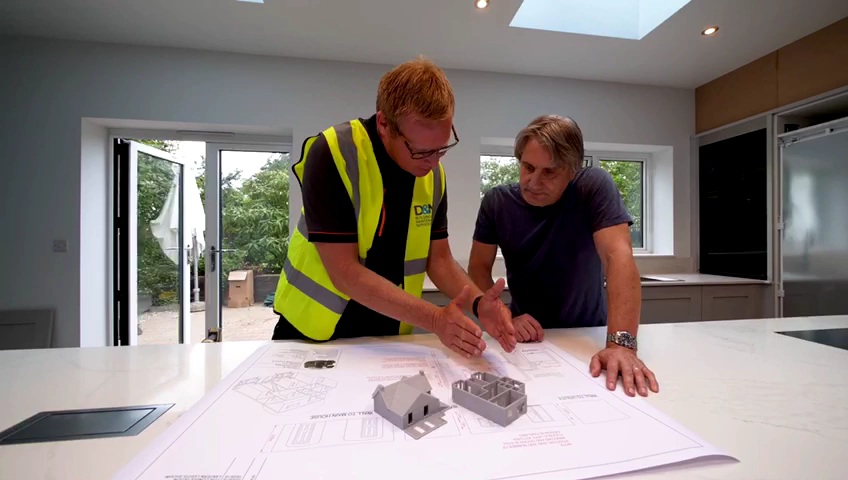
D&M Building Services manages all three processes as standard on every relevant project. We assess the planning position at the initial site visit, serve party wall notices where required, submit Building Regulations applications, and schedule all required inspections. Our clients do not need to understand the planning permission vs party wall distinction in detail, because we manage both, and Building Regulations, on their behalf.
6. How D&M Building Services Manages All Three
The planning permission vs party wall process is one that D&M Building Services has managed on dozens of extension projects across Long Eaton, Nottingham, Derby, and the East Midlands. Our approach is the same on every project:
- Planning assessment at site visit: We establish the planning position for your specific project at the initial site visit, whether Permitted Development applies, whether prior approval is needed, or whether full planning permission is required. We advise on the design approach most likely to succeed before any drawings are commissioned.
- Planning application management: Where planning permission is required, we manage the full application process including coordination of architectural drawings, submission to the local planning authority, and liaison with planning officers throughout the determination period.
- Party wall notice service: We identify whether the Party Wall etc. Act 1996 applies to your project and serve the required notices as standard where it does. We manage the surveyor appointment process if your neighbour dissents, and ensure the Award conditions are followed on site.
- Building Regulations submission and inspections: We prepare and submit the Building Regulations application, schedule all required inspections with Building Control, and obtain the completion certificate at the end of the works.
Our credentials are independently verified. FMB Master Builder Awards 2019 , Highly Commended. Central England Prestige Awards: Construction Company of the Year 2025 (East Midlands), Building & Maintenance Company of the Year 2024, Home Construction Company of the Year 2023, Loft Conversion Specialists of the Year 2022. FMB accredited since 2016. Over 70% of our work comes from referrals and returning clients.
7. Frequently Asked Questions: Planning Permission vs Party Wall
Is planning permission vs party wall the same thing?
No, planning permission and a party wall award are completely separate legal processes. Planning permission is granted by your local planning authority and governs what you are allowed to build. A party wall award is produced by a party wall surveyor under the Party Wall etc. Act 1996 and governs works that affect shared boundaries or adjoining structures. You can have planning permission and still need a party wall award. You can have a party wall award and still need Building Regulations approval. All three are independent.
Do I need both planning permission and a party wall award for my extension?
Possibly both, possibly one, possibly neither, it depends on the specific works and your property’s location and planning history. Many single-storey rear extensions fall within Permitted Development and do not require planning permission, but still require party wall notices if the works are within three metres of a neighbouring property’s foundations. Two-storey extensions typically require both planning permission and party wall notices. Building Regulations approval is required for virtually all structural extension work regardless of the planning or party wall position.
How long does the planning permission vs party wall process take?
Planning permission: the standard determination period is eight weeks from a valid application. Permitted Development prior approval is typically three to four weeks. Party wall: if your neighbour consents in writing, the process can be completed within two to three weeks of serving notice. If a surveyor must be appointed and an Award produced, typically four to eight weeks. Building Regulations: the application can be submitted before work starts and inspections are staged throughout the build. The completion certificate is issued on satisfactory completion.
Can my builder manage planning permission and party wall on my behalf?
Yes, a professional building contractor manages the planning permission vs party wall process as a standard part of their service. At D&M Building Services, we assess the planning position at the site visit, serve party wall notices where required, submit Building Regulations applications, and coordinate all three processes on our clients’ behalf. You do not need to navigate this alone.
What happens if my builder doesn’t understand the party wall process?
A builder who does not understand or manage the party wall process correctly creates significant risk for you as the homeowner. Your neighbour can apply for a court injunction to stop the works. You can face claims for damages. The works may need to be partially undone. And when you come to sell the property, an absence of party wall compliance can create complications in the conveyancing process.
D&M Building Services manages the planning permission vs party wall process as standard on every relevant project. FMB-accredited since 2016. Award-winning. Based in Long Eaton, covering Nottingham, Derby, Leicester and the East Midlands. Get in touch for a free site visit: 0115 877 3009.
D&M Building Services
Extensions | Loft Conversions | Renovations | Property Development
Based in Long Eaton | Covering Nottingham, Derby, Leicester & the East Midlands
Get in touch to discuss your project.
Sources & Further Reading
Home Extensions in Long Eaton: 6 Essential Things to Know – D&M Building Services Blog
Home Extensions in Nottingham: The Complete Guide – D&M Building Services Blog
Party Wall etc. Act 1996 – legislation.gov.uk
Planning Portal – planningportal.co.uk
Building Regulations – gov.uk/building-regulations-approval
Federation of Master Builders – fmb.org.uk
Want more from us in your Google results?


